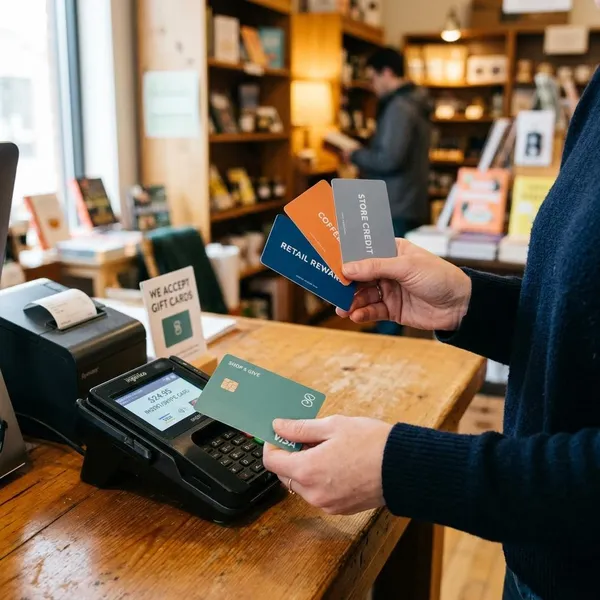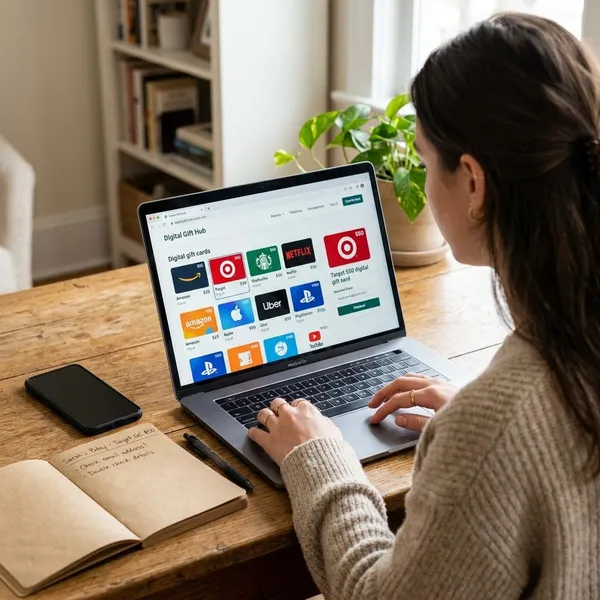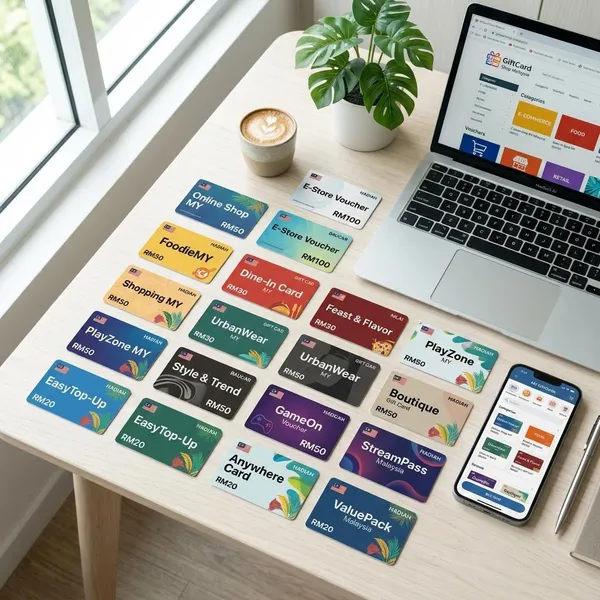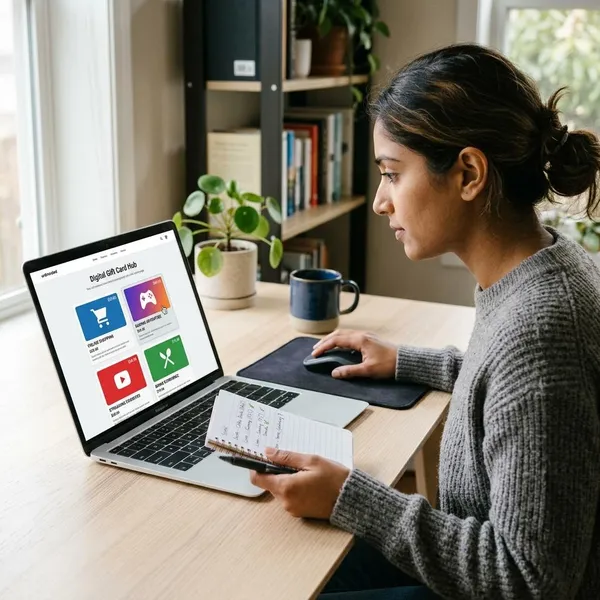
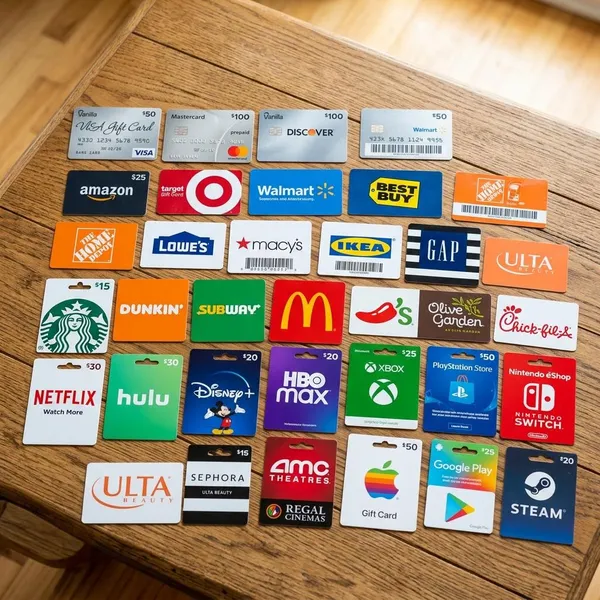
Gift cards come in several useful forms, including store gift cards, prepaid gift cards, digital gift cards, physical gift cards, and choice gift cards. The best option depends on where the recipient can use it, how quickly it needs to arrive, and how much spending flexibility you want to give. Some cards are limited to one brand, while others work across many merchants.
What are the main types of gift cards
The main types of gift cards can be compared in two ways: where the card can be used and how the card is delivered. Store cards and prepaid cards describe spending access, while digital and physical cards describe format. Choice gift cards sit between those groups because they let the recipient select from several brands.
| Type | Best for | Main limitation |
|---|---|---|
| Store gift cards | Recipients who already like a specific brand | Usually limited to one store, app, or brand group |
| Prepaid gift cards | Flexible spending across many merchants | May include fees, activation steps, or payment restrictions |
| Digital gift cards | Fast delivery and online-first gifting | Can be missed in email or limited by redemption rules |
| Physical gift cards | In-person giving and wrapped presents | Can be lost, delayed, or require activation |
| Choice gift cards | Giving options without choosing one exact store | Only works with the brands included by the issuer |
How gift cards work
Most gift cards follow a simple flow: the card is bought, value is loaded, activation happens if required, the recipient spends the balance, and any remaining funds can be checked until the card is empty.
Buy the card
Gift cards can be bought from official brand websites, large retailers, supermarkets, pharmacies, apps, and gift card platforms. Buying from the brand or a trusted retailer usually gives clearer terms and better support if the card does not activate or arrive correctly.
The buying source matters most for high-value cards, prepaid cards, and cards picked from public racks. Keep the receipt or digital confirmation until the recipient confirms the card works.
Load the value
Some gift cards come in fixed amounts, such as 25, 50, or 100. Others allow a custom value within a set range. Store cards often give the recipient the full amount loaded, while prepaid cards may cost more than the usable balance because of purchase or activation fees.
Activate the card
Many cards are activated automatically when payment is completed. Physical cards bought in stores may be activated at the register, while digital cards are usually activated when the code is issued.
- Keep the receipt until activation is confirmed.
- For prepaid cards, check whether registration is needed for online purchases.
- If a card fails, confirm activation before assuming the balance is gone.
Redeem the balance
To redeem a gift card, the recipient usually enters the card number and PIN online, scans a barcode in store, adds the card to an app, or applies it to an account. Each purchase reduces the remaining balance.
Split payments are not always smooth. Some merchants let the recipient combine a gift card with another payment method, while others make partial balances harder to use online. This is one reason to choose a card value that matches the expected purchase.
Check remaining funds
Most issuers let recipients check the remaining balance online, through an app, by phone, or on a purchase receipt. This helps prevent small leftover amounts from being forgotten. It is also useful if a transaction is declined and the recipient needs to know whether the balance is too low.
How to choose the right gift card type
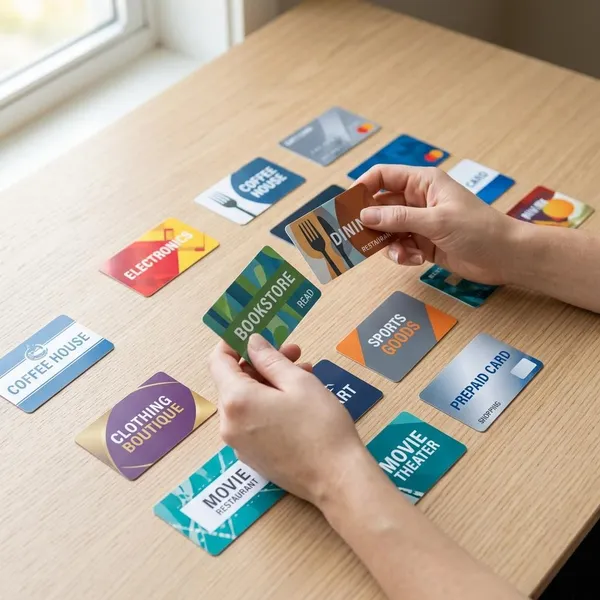
The right gift card type should match the recipient, the occasion, and the way the card will be used. A flexible card is not always better than a specific one. A fast digital card is not always better than a physical one. The best choice is the card the recipient can redeem easily and actually enjoy.
Match the recipient
Start with the recipient's real habits. If they often shop at one store, use one app, order from one restaurant, or follow one hobby, a store card can feel thoughtful. If you are buying for a coworker, neighbor, teacher, or distant relative, a prepaid card, marketplace card, or choice card is usually safer.
Pick the right format
Choose digital when speed, distance, or online use matters. Choose physical when the gift will be handed over in person, wrapped, or placed inside a card. The amount may be the same, but the experience feels different.
- Digital works well for same-day gifts and remote recipients.
- Physical works well for parties, holidays, and formal exchanges.
- Choice cards work well when you want flexibility with a more curated feel.
Check where it works
Always check whether the card works online, in stores, in an app, in one country, or across several locations. A store card may be limited to one brand. A prepaid card may work broadly but still fail for certain subscriptions, international purchases, hotel holds, or partial payments.
If the recipient lives in another region, look closely at currency and country rules before buying. A card that works in one market may not work on another version of the same brand's website.
Review fees and limits
Fees and limits affect how useful the gift really is. Store gift cards are often simple, while prepaid cards may have purchase fees, activation rules, spending limits, or restrictions on certain transaction types.
| Detail | Why it matters |
|---|---|
| Purchase fee | The sender may pay more than the recipient can spend. |
| Activation rule | The card may fail until setup is complete. |
| Region limit | The card may not work in the recipient's country. |
| Split payment rule | Small remaining balances may be harder to use. |
| Expiration or inactivity term | The recipient may lose value if the card sits unused. |
Consider the occasion
The occasion can point to the right type. A last-minute birthday gift often calls for a digital card. A graduation gift may need the flexibility of a prepaid card. A holiday exchange may feel better with a physical card and a handwritten note.
For workplace rewards, flexible and easy-to-distribute cards usually matter more than brand personality. For close friends or family, a specific store, restaurant, or experience card can feel more personal.
Best gift card types for common needs
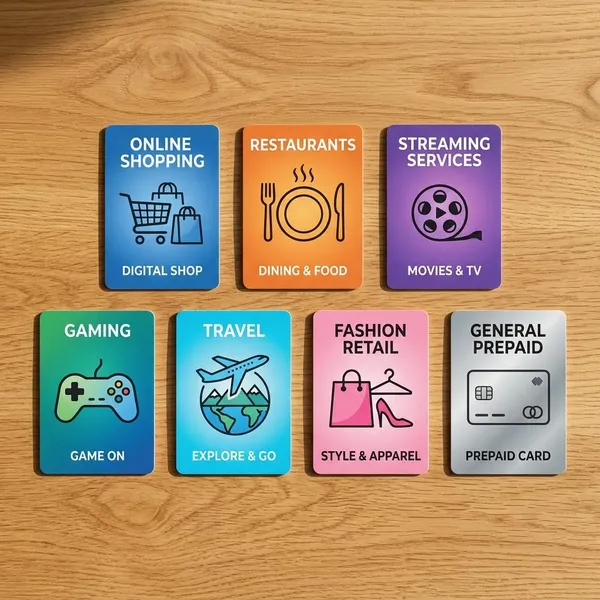
Choosing by situation is often easier than choosing by brand. The strongest option changes depending on whether the goal is speed, flexibility, daily usefulness, dining, travel, or employee recognition.
| Need | Strong gift card type | Why it fits |
|---|---|---|
| Last minute gifts | Digital gift cards | Fast delivery by email, text, or app |
| Unknown preferences | Prepaid or choice gift cards | More room for the recipient to decide |
| Everyday spending | Grocery, marketplace, or broad retail cards | Useful for routine purchases |
| Food and dining | Restaurant, coffee, or delivery cards | Easy to enjoy and simple to redeem |
| Travel and experiences | Travel, rideshare, hotel, or event cards | Supports a trip, outing, or memorable plan |
| Employee rewards | Choice, prepaid, or broad retailer cards | Works for different tastes across a team |
Conclusion
Store gift cards work best when you know the recipient's favorite brand. Prepaid cards offer broader flexibility. Digital cards are best for speed, physical cards are better for presentation, and choice cards give the recipient options without becoming completely open-ended.